Spark to Design {#spark2design}

I am fascinated by what people miss seeing and experiencing on a daily basis. We all too often get stuck in a routine and distracted by our electronic, social media-based world. What details are we missing by not taking the time to really see and experience those things around us. I believe that with practice and intention, we can be inspired by patterns and design elements in objects we see or events we experience, every day. By seeing with intent, you could see the layered geometric designs of the concrete overpass structs, or the lines the bottom of a bamboo steamer or the unique pattern the moonlight casts through a window.

You can understand then, why my favorite part of making quilts is the design process of the quilt and then actually making that design into a quilt top. My typical process is finding elements in the world around me, photographing that image (the spark) and then creating a quilt design from that image. I love finding the geometry in things I see and looking at those individual elements and creating a design purely from one or two of the elements… breaking things down to the minimal components.

When I design and explore the elemental components, there are typically several editing and modification steps between the spark to final design. If I design on my computer instead of paper there are typically more iterations.

Let’s walk through a couple of spark to design processes that have been done using computer software. Note: I use Quilt Canvas which is a subscription based web tool.

Bridge

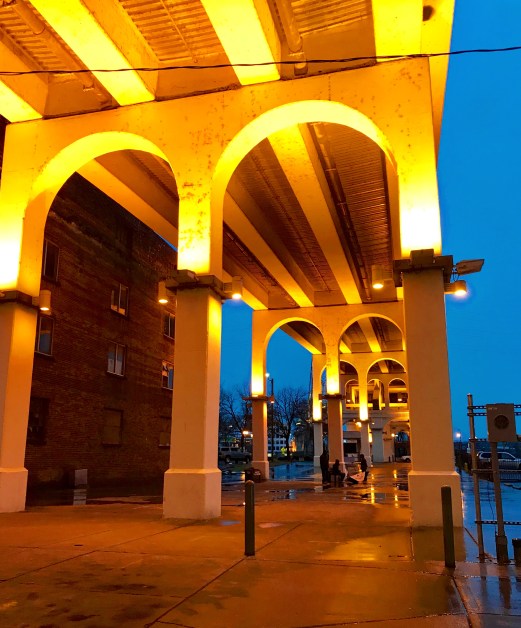
My friends and I were out for a drive at dusk in Nashville in February. I was in the passenger front side and as we went back to our apartment, we went under a bridge. I loved the arches and contrasting colors from the evening lights and the evening sky. As we drove this was the spark I captured through the car’s open window.
IMG_6724

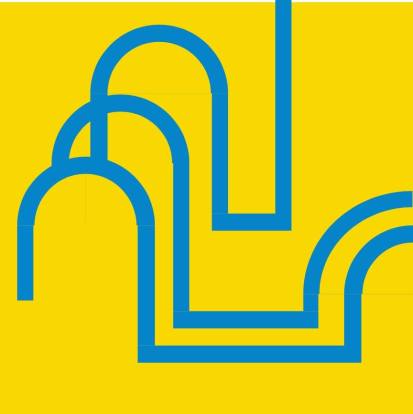
Fascinated by the arches and how they look stacked this was the first design which I really liked where this was going but the left bottom arch just kind of hung in nowhere.
53668515_10157355781527625_9061875210621288448_n

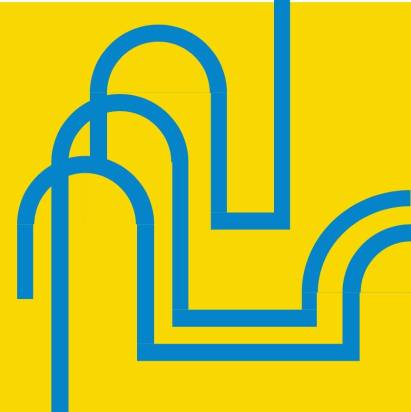
To continue the eye fully to the edge I extended the second arch through to the edge which I really liked but it still had the issue of the lower arch hanging in no mans land.
54277834_10157353535547625_4253418641371955200_n

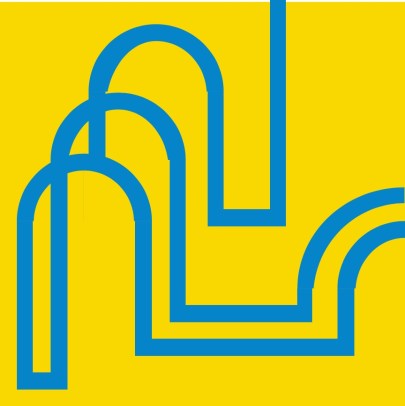
So what would happen if I joined the lines for the second and first arch in that bottom left corner. I loved the connecting lines and how they gave a little more flow and connectivity to the design.

54255168_10157355826582625_5655869087222333440_n

Yes, I liked this but I think we needed to have less negative space in that corner, so I dragged those connecting lines down to fill the bottom left corner.
Bridge_1

Now that the design was what I was looking for what if I played with the colors. I loved the color palette which was inspired by the palette of the photo. I think the additions of the orange and the red-brown adds interest and has a great 60s vibe.

Bridge_1-9

This was the final design. Yet to be made but is on my to do list (which is rather long).

Carriage

This year I went to Marrakesh, Morocco with Amy Butler and Valori Wells. It was one of the most amazing and inspiring trips. The color and tile work everywhere was mind blowing. In one of our shopping adventures, Valori and I explored an alley behind some of the craftsman shops. At the back there was this old carriage. The geometry of the rectangles and curves captured my eye, those shapes just fascinated me.

fullsizeoutput_e41

First design was looking at the elements in the carriage, the rectangles of the stair like top, the curve of the undercarriage, then the rectangles of the body. I also had one that included the semi circle within the undercarriage curve but before I even saved the design I removed it as it just created additional noise.
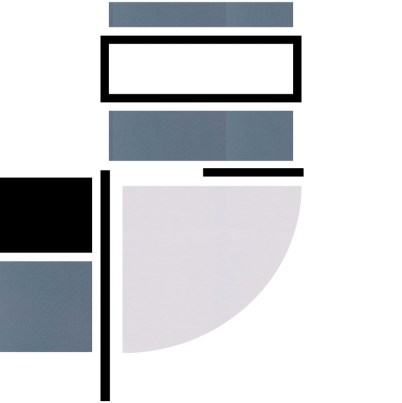
CarriageRide

After the first design I questioned whether the curve was needed in the design, so I removed it. I really think that this was more due to the color I chose within that grey scale.
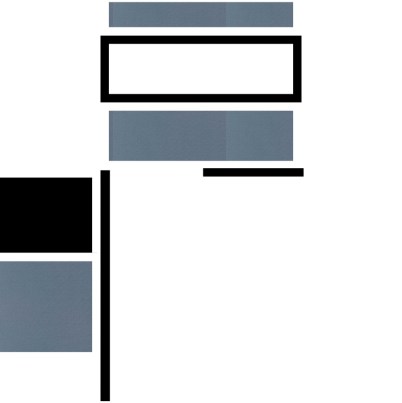
CarriageRide-3

Deciding that the curve needed to be part of the design I added it back but played with other areas trying to get a better balance between the greys to make the curve more part of the design.

CarriageRide-2

Finally, deciding that it was really the coloring was throwing the design off. I went to a pure two color design – red and white. I also made a couple of other simplifications:

  • Removed the use of borders vs. filled rectangles on the top stair portion. I kept all the rectangles as solid shapes.
  • Removed the second rectangle on the left side and representing this now by the lines and negative space
  • I also moved the design over to the right, extending those rectangles and lines on the left column.

CarriageRide-6

Again, wanting to make sure the curve was a good fit I removed it but decided to add it back, as I really like that curve. It was the core element that pulled me in originally.

CarriageRide-7

So, lastly after adding the curve, I shortened the line that was on the left that represents the edge of the missing rectangle. I liked the balance of this line and it stopping just over 1/2 way gave it interest, a hint that there is something in that space. It no longer creates a firm outline.

CarriageRide-8

Let me know if you have any questions. Happy to answer anything around design/quilt design.

Community {Part III – Giving Back}

Giving back to one’s community, to me, is the most important things you can do for your community. There are lots of was to give back to your community and it does not always involve money.

Last year, North Carolina went through a couple of terrible hurricanes that left areas devastated. Some folks are still without homes and belongings. As this is in my backyard I felt compelled to contribute in some way. I have donated several clothes, kitchenware and bedding already. My favorite contributions though, that I recently finished, are  two quilts that were donated to Carolina Hurricane Quilt Project.

The first project is using Denyse Schmidt’s Ocean Wave quilt pattern. I started with a 100 charm pack of various Kaffe Fassett fabrics, and 3 solid charm packs that I had received in conference goodies. The HST laid out beside each other were a little saturated for me so the extra negative space in the ocean waves pattern was perfect. I am not a huge fan of the prints but I loved how it turned out. I know it will be treasured by its new owner too.

IMG_7086

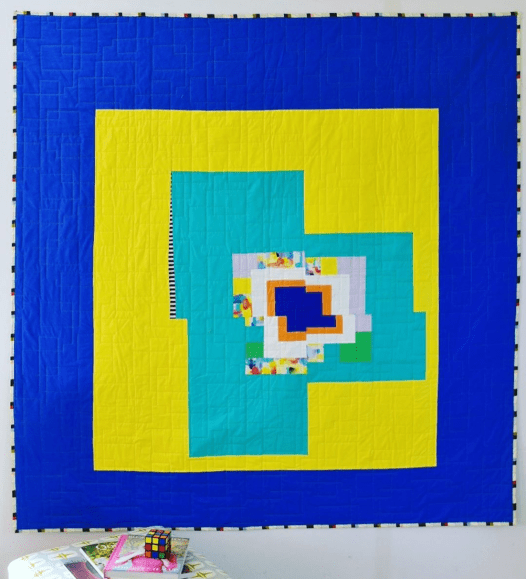
The other quilt was an UFO that I had lying around for a couple of years. It was originally designed for a back but I decided it was better as a quilt top. I made it slightly larger by adding blue border. I think it would be such a fun kids quilt.

Screen Shot 2019-06-14 at 11.34.20 AM

Both quilts were quilted by Cary Quilting Company which is also the place to drop off and donate quilts for #Carolinahurricanequiltproject.

There are many groups that you can join that are all about giving quilts to charity.

Making quilts or quilt blocks for quilts to donate are one way to give back to your community, however there are many other ways to give back as well. Here are other some ideas for thought:

Volunteer

One of the things I hear from several guilds and groups is how hard it is to get volunteers. Time is one of the easiest things you can give to your community, even if its just an hour here or there. Opportunities with you group or guild could include:

  • An event – manning a booth or for setup / take down
  • Bringing refreshments
  • Organizing an activity – like a swap
  • Join a committee or a board

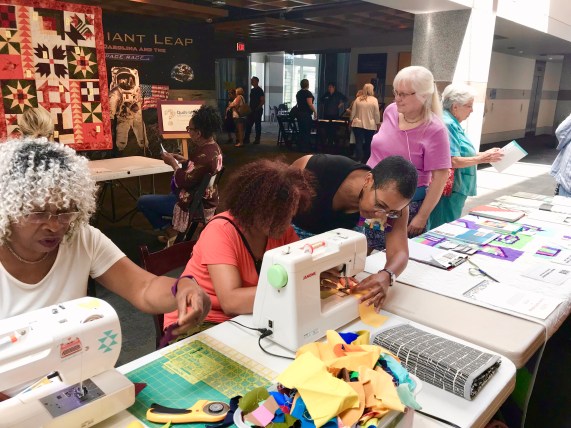
One of my favorite things to do is to volunteer for events that nurture other people’s interest in the activity that  I love (in this case, quilting). For example, this weekend, the Triangle Modern Quilt Guild hosted a booth at the NC Museum of History to support the Quilt Speak Exhibit. The booth highlighted Modern Quilting and had a couple of machines and fabric there, so folks (the public) can make an improvisation block. A way of learning some modern quilting techniques and promoting participation, a great conduit for community interaction. We even had people trying sewing for the first time.

fullsizeoutput_e62

Education Opportunities

Education is so important in today’s societies. Art and hand skills are missing in many schools today, and I think people are missing the ability to express themselves, become creative thinkers, or see | understand other views. Some options here include volunteering at your local schools (or your kids school), or at local community centers, Local guilds or art centers.

For any of these think about:

  • A talk you could do (also gives you a chance for public speaking)
  • A Program (like a tutorial of a technique)
  • Join a group that supports outreach programs to schools or teens
  • Or run an after school program at your local school.

I am hoping over the next year to either help out with an existing outreach program or start one for kids and teens. I would like to teach sewing basics, quilting basics and design elements. I will let you know how this goes.

Donations

Don’t forget many art programs are working on grants. If you have left over supplies that you don’t know what to do with, think about donating it to an art program. I donate everything from instructional or art books, glue, paper, pens, fabric, sewing notions etc.  Also, don’t be afraid to ask what the organization needs as they may have specific program in mind. For example, one group needed a couple of Gees Bend books as they were studying them that year.

Those were my ideas and things I have tried. I would love to hear how you give back. I am always looking for new opportunities and ways to give back or participate in my community.

Other Community Posts in this series:
Community {Introduction – Part I}
Community {Group Activity – Part II}


Playing with Large Scraps {creative journey}

I have been in a somewhat creative rut since November or so, however I have recently discovered Stanley Whitney’s work. He had his work on display at Lisson Gallery in New York, and has a unique style where his pieces use large colored painted areas represented in rows.

Then one day, friends and I were talking about these larger scraps we had and how fun it would be to use those scraps to make quick scrappy quilts. These two events then merged in my head. As a result, I have been playing with a series of ideas.

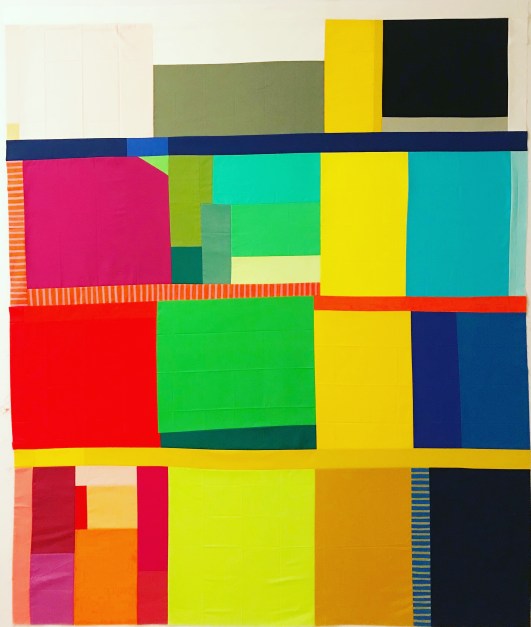
The first was to take Stanley Whitney’s idea and explore the concept to fabric. I used the yellow fabric as anchor, to draw people in and follow it down. My favorite parts to this was introducing the strip fabric and also that interaction with the lighter blue scrap along the first row sashing and green triangle in the pink.

IMG_5139

“Whitney” (~55″ x 60″)

The next one, I wanted to explore using all neutrals with a couple of splashes of color, in the sashing (yellow and the red linen print). I enjoyed the use of various fabric substrates in this one – linen, cottons, denim’s and flour sacks.

IMG_5204

“Stanley” (~50″ x 55″)

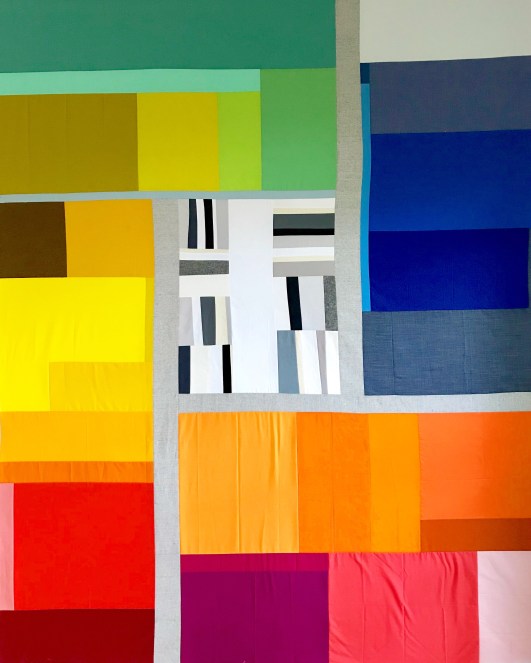
This last and most recent piece was taking the original concept but making a piece truly me. The colors I had left over, were almost rainbow like. I liked keeping the like colors together and forming these blocks. I used a linen from Robert Kaufman as sashing and I really enjoyed how this worked within this piece.  These the blocks of color and sashing I think help the eye move around the piece.

The hardest part of this quilt was deciding on the middle, it definitely took several trials, photo’s and text to friends for opinions. In the end, I had some striped class samples I use in my Improvisation class that when placed up on the design wall, I immediately knew this was the center. The center in its very neutral but smaller piecing, centers the piece – couldn’t be happier.

IMG_7060

“Study III” (~60″ x 70″)

These were such fun exercises and the tops came together in a day. I am out of my creative rut but not my finishing rut….these pieces still need quilting. Sigh. I will need to get this done soon though as these will be samples for my upcoming QuiltCon class “PIE003 Scrap Diving”. 

So, (the plug :-))…..if you are in a creative rut or have lots of larger scraps (say up to a fat eighth) or want to create a quick quilt – sign up for my class. The QuiltCon catalog is available here and registration starts end of June.