Category Archives: Journey

Why take a break from Social Media??

This year, I have felt like I’m in some kind of funk.  I have been lacking motivation and ideas. I get in front of my sewing machine, sew a couple of lines and then take a break. As the year progressed, I noticed the time spent on social media (especially Instagram) increased and by the beginning of June it was at least 2 hours a day. The constant visual stimuli of Instagram, and watching what others were producing (which felt like over productivity) was feeding the inadequacy I was feeling. I was feeling anxiety about not making progress around my own work.

IMG_3971

With my birthday being around the corner, I decided to take a break from social media for the month of June. My hopes were to take time to find me again. My goals for this month were:

  • Take some me time
  • Take an Instagram break
  • Work on my book for 1 hour each day
  • Spend a minimum of 1 hour sewing every day

Everyone was so supportive about taking a break. I lost only 2 followers on Instagram after the announcement. Those that might be wondering about how it all turned out, I got some mixed results. The biggest lesson I learnt was I need to expand it to all electronic use, unless I need to use it to accomplish the tasks I sent forth. Why? Well, you might all of a sudden binge watch all episodes of House and Dawsons Creek. 😉

Some of the positives, I was more present and more focused. I found I was more open to some design inspiration and did collect more of my book thoughts. I got some quilt this done but not as much as I would have liked (due to the binge watching).

Being Present

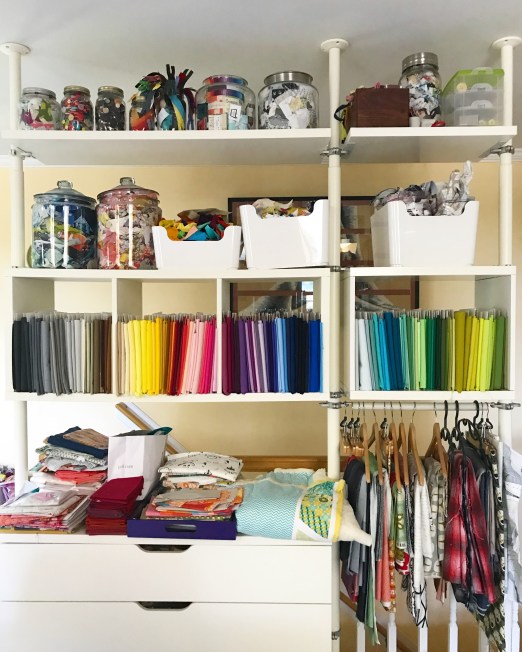
I did manage to add a new cubby to my solid fabric storage and its all stored based on color card order.
IMG_4077

I was more present in my life. I visited Saxapahaw, NC for my birthday …

fullsizeoutput_9b5

…and my little one graduated elementary school. So proud of him, as he was awarded the technology award for his track and grade.
fullsizeoutput_9b6

Quilt Design

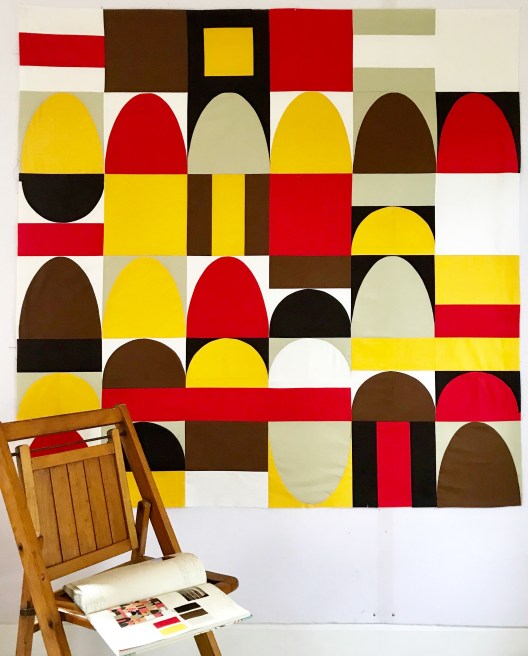
I did find that my mind is more open, so designs came fast and hang around in my head until I got them down on paper. I found my expressing some of my feelings in some of these. Captions are provided to explain some of the inspiration.

IMG_4156

Crack of Light – inspired by hope of light that shines through when times are dark.

IMG_4176

Pressure – pressure on an object causes it to give, become divided or split.

IMG_4082

Road markings inspired by temporary lines that were drawn due to road closures.

Grate

Inspired by a image of a vintage tractor grate.
IMG_4290

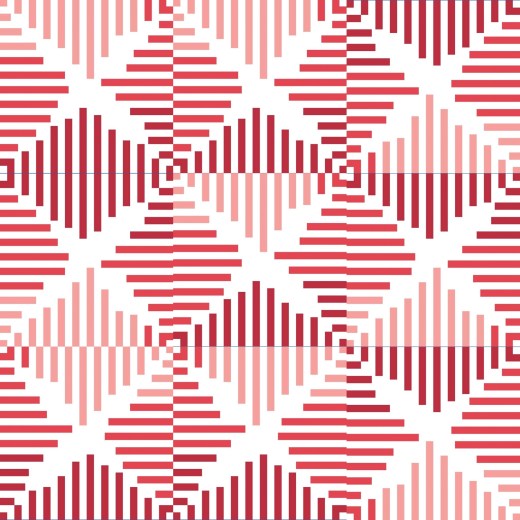
Playing with lines, inspired by volume sound bars.
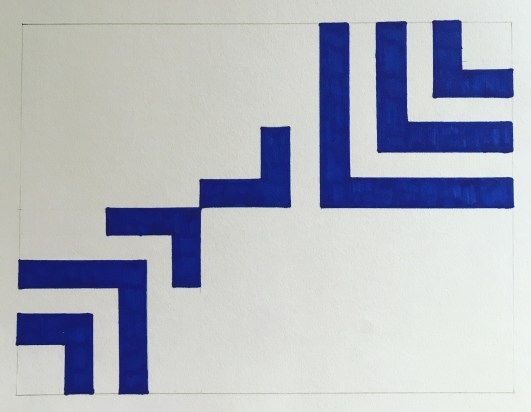
IMG_4461

What my minimalist Log Cabin design would look like.

fullsizeoutput_9b2

Improvisation lines and frames inspired by ladders steps

Quilts


I did make some progress on a few quilts. I have multiple projects in different stages.

I worked on some binding projects. Two of which are book quilt finishes.
IMG_4092.JPG

…finished a couple of quilt tops.

IMG_4277

Coliseum Quilt – A book project

IMG_4478

Correlation Matrix – work on my 100 days of colored angles.

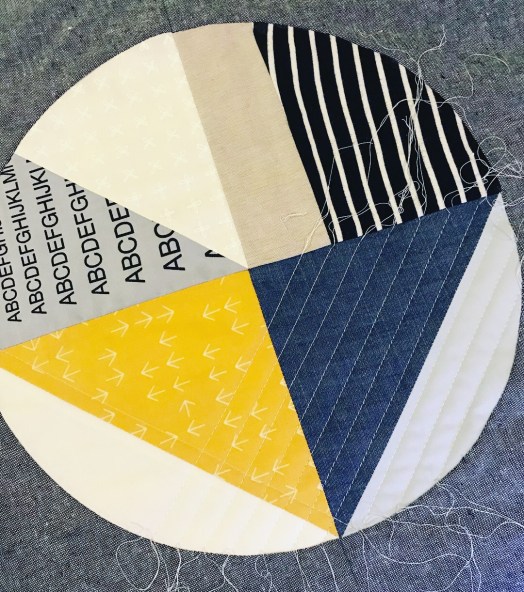
… worked on some straight line quilting for my rotating spokes book project.
IMG_4174

…and finished of one quilt that was shipped off to a magazine. It should be published in November, when I will have a big reveal.

So, all in all pretty productive. I will definitely be considering another one this year. I am thinking that it should be something I do at least once every six months.

Have you tried a social media break? What worked and what didn’t work?

Submitting to a Magazine

I have now been submitting patterns to quilting magazines/publications going on 3 years, with at least 4-6 publications a year. I have been very lucky and have had great experiences with those I have worked with. Have you every thought about submitting to a magazine but not sure how to do it? Here are some pointers based on my experiences.

Submission process

  1. First step pick up a couple of issues of the magazines that you want to submit to. Check out layout, content, aesthetic. Make sure your project falls into their aesthetic.
  2. Start by checking the submission guidelines for the magazine you want to submit to. If you can’t find them, reach out via email requesting them.
  3. Depending on the submission guidelines, you may be required to submit a finished quilt or just design/ideas. I like submitting a couple of designs and offer to change size and color to make it easier to fit with an upcoming issue.
  4. It is important to submit the designs/or quilts to only one magazine/publication at a time. Don’t submit the same design to multiple magazines.
  5. The submission response varies for each magazine. I have had everything from 1-4 weeks. Communication maybe across multiple emails deciding on dates, and aspects of the pattern.
sunday-best

Quilt used for Best in Show, QuiltCon Magazine 2017

Contract process

  1. Once they say yes, they should send you a contract. Don’t agree to doing anything without a contract (I learned this lesson the hard way).
  2. If you can afford it, have a lawyer read through the contract and explain it to you.
  3. If you can’t afford a lawyer some of the key things you need to read are;
    • When do your rights get returned to you? It is common that this is 6-12 months for most magazines/publications.
    • What gets returned to you? Do you have the rights to re-publish? I like to get me rights back to then publish as my own pattern to sell. Rarely, but sometimes magazines will give you the rights to the images as well.
  4. Most magazines do not allow you to share on social media until the magazine//publication is on sale. When they are about to release, several publications will provide you with images to use. If they don’t ask if they can. You can ask if you can have the rights to those photos for your future use as well.
  5. Validate payments language and stipulations
    • Check when you receive the money, and the process of payment. Many will require you to submit invoice or purchase order. Others will need to receive the delivery before they pay. The other option I have seen is that payment will be made once the issue starts to ship.
    • How much are you being paid? This is typically negotiable, but if its your first publication you may want to balance experience and worth.
  6. Do they have terms in there for re-use? If yes, how much will they pay for re-use across other media and forms. Ask yourself if this is something you want. You may want to negotiate this.
  7. Terms and conditions are typically included on what happens if they choose not to use your project.
  8. Contracts may include and should include expectations on deliverables, timing and possibly shipping details.
  9. Shipping costs to the magazine, most will pay for the returning of the quilt, others may repay your shipping costs, you may need to pay it yourself. You will need to submit receipts for repayment.
  10. Some magazines have partnerships with fabric manufacturers and may be able to provide you fabric. I typically will use my own fabric for a submission but if this is something you are interested in, there is no harm in asking.
LQP_54_social_projectumbrella

Image Provided by Love Patchwork & Quilting

Delivery Process

  1. Make sure you understand what you need to deliver and when. It is important that you are on time with your deliverables. Life happens though, just communicate as early as you can and let them know the situation and most will work with you on any issues/delays etc. Communication is key.
  2. Most magazines will convey how they want the content delivered. They may provide you with templates and specific instructions. Make sure you follow the instructions.
  3. Mostly, I have written most of the patterns as part of the submission (see expectations for print) which is one of the deliverables. Some magazines may prefer to write it themselves. Check what your responsibilities are.
  4. I have seen that typically word is the preferred file format for the actual pattern  – if there is no template check out previous releases to get an understanding of what they are expecting.  You may want to include:
    • An introduction, quick blurb about your project.
    • Materials
    • Cutting instructions
    • Step-by-step pattern directions
    • Notes, Tips and acronym dictionary (if you used any, like WOF, RST etc. )
  5. For the instructional aspects, you may be asked for photos to illustrate your instructions. Make sure you check with the publishing body what backgrounds are OK, size of the file and make sure they are sharp and well lit.
  6. If you are asked to provide diagrams it maybe best to use illustrator and save the .ai files. Most magazines will have designers who are savvy in illustrator. They may require specific size work areas, file types and/or layers within illustrator.
  7. I will store all my soft copy deliverables in a google drive and share that link with the contact person to pick up. Keep an eye on your email in case something is incorrect or wrong with the delivery of the files.
  8. For the quilt, if you have agreed on techniques, color and size; if you decide to change any aspect you agreed upon communicate with your contact point and get mutual agreement on the change before moving forward with it.
  9. Make sure you know who is responsible for the photography of your quilt. Know when you have to ship it to get it there on time.  Understand how the quilt will be returned and ask for a tracking number so you know your quilt arrives on time.
  10. Ship your quilts following their instructions (if any are provided). Pack it in a plastic bag, include the invoice for the project, so they know which project it is for.
  11. You will likely need to also provide a headshot photo, and additional information about you like Instagram name, and blog.
lqp_43_p36-40_projectsherbert-front

Image Provided by Love Patchwork & Quilting

Expectations for Print

  1. The publishing company will edit your pattern, both from a formatting perspective and actual content. They need to fit it within their allocated space for the design, don’t be shocked if they have made major changes to the document you sent them. It is likely that you will not have a chance to review it.
  2. The publishing company will also use a graphic designer/ illustrator to modify your diagrams etc to ensure it matches their formatting and may combine or separate them into one or more diagrams. They may add to your diagrams.
  3. Until the quilt is scheduled to be released you may not hear again from the publishing body. You may not know if your quilt lands up on the cover until they send you a social media package….its all a very exciting.
  4. To promote your quilt ask for the photos you want, if you would like additional pictures…sometimes they don’t send all of them to you. I always ask for the staged quilt photo and the full front view of the quilt.
  5. The company will typically ship back your quilt once issue if released and most will provide you with a copy of the issue.

If this is something you want to do, don’t be afraid. The worse case is they say no. Now this shouldn’t be taken poorly, your quilt just might not be right for that magazine/publication. Try it with another magazine that may fit better. Best case you will have a quilt in an upcoming publication.

Please note, that these tips are based my experiences, and others may have had different experiences. Feel free to leave a comment if you have experienced something different so others can learn, or if you have other questions and I will do my best to answer it.

March {Plan}

Wow, it is March already. Where did February go?? Let’s get down to business, and plan out the rest of the month….lots to do on this end. I am happy with the progress I have made over the last two months….though not necessarily in all aspects (ie. the book is still moving but slowly). Some of the highlights include:

  • Business: Complete Teaching Plan and submitted to LQS + Classes are scheduled for Q1 + Q2, Supply lists sent
  • Book: Finished Project Plan
  • Book: Finished Border 2 for Art Deco Medallion
  • Deadline: Send finish quilt and pattern for magazine
  • Deadline: Wrote and sent article for MQG
  • Deadline: Sent quilt to Quiltcon
  • Deadline: Finish #mqgswap item
  • Attended QuiltCon

So, the latter 1/2 of this month I would like to focus on my book. Here are some of the key activities I would like or must accomplish.

Category Project/Activity Target Date (day/month) Action
Business Quickbooks  3/6  Purchase + add financials
Business Submit Taxes + Annual report 3/11 Pay someone to do this
Business Phased Circles Pattern for Class in April 3/16 Send to Graphic Designer for layout
Business Teach Improvisation Class 3/17 Preparation Complete
Deadline Interview|Article 3/5 Complete
Book Group Quilt  3/5 Sent for quilting – Complete
Book Manicured Garden Quilt 3/18 Send for quilting
Book Chapter: “Art Deco
Medallion”
3/31 Finalize Content for Chapter
Book Art Deco Medallion
Quilt
 3/31 Finish Border 3+4
Book Chapter: “Manicured Gardens” 3/31 Finalize Content for book
Fun Monthly “Favorite
Things” Giveaway
 3/5 Complete
Fun Traveling Stitches Blocks  3/5 Complete
Blog Month Plan  3/5 Complete
Blog Book Update  3/8 Planning your book
Blog Blog hop post 3/12 Complete
Blog MQGMiniSwap 3/17 Complete
Blog How to Submit to a Magazine 3/24 Write Post
Blog Traveling Stitches 2018 3/31 Write Post
Balance Health 3/31 Loose between 10 pounds. Increase vegetables; 8 glasses of water and exercise 3x a week by March end.

I am interested in those that are running a business or growing your quilting hobby, what do you plan out or do to keep track of everything?