Tag Archives: quilting

Submission Process for my Solo Exhibition

In 2022, one of my goals that I needed to accomplish to quit my job and become a full-time artist was to be successful in getting accepted to do a solo art show (exhibition). I was successful in that task.

Town of Cary (in NC and where I live) has a rolling call for artists that get reviewed twice a year (August 1 and February 1). You will need 10 digital images of your work (that has to reflect what you will exhibit but not the actual quilts), an image list, a resume (including exhibition history….if you are a quilter include quilt shows), and an artist statement for the exhibition. If approved you will be provided a space in one of the below galleries (the selection committee decides on the space and let’s you know).

My Submission Content

Digital Images
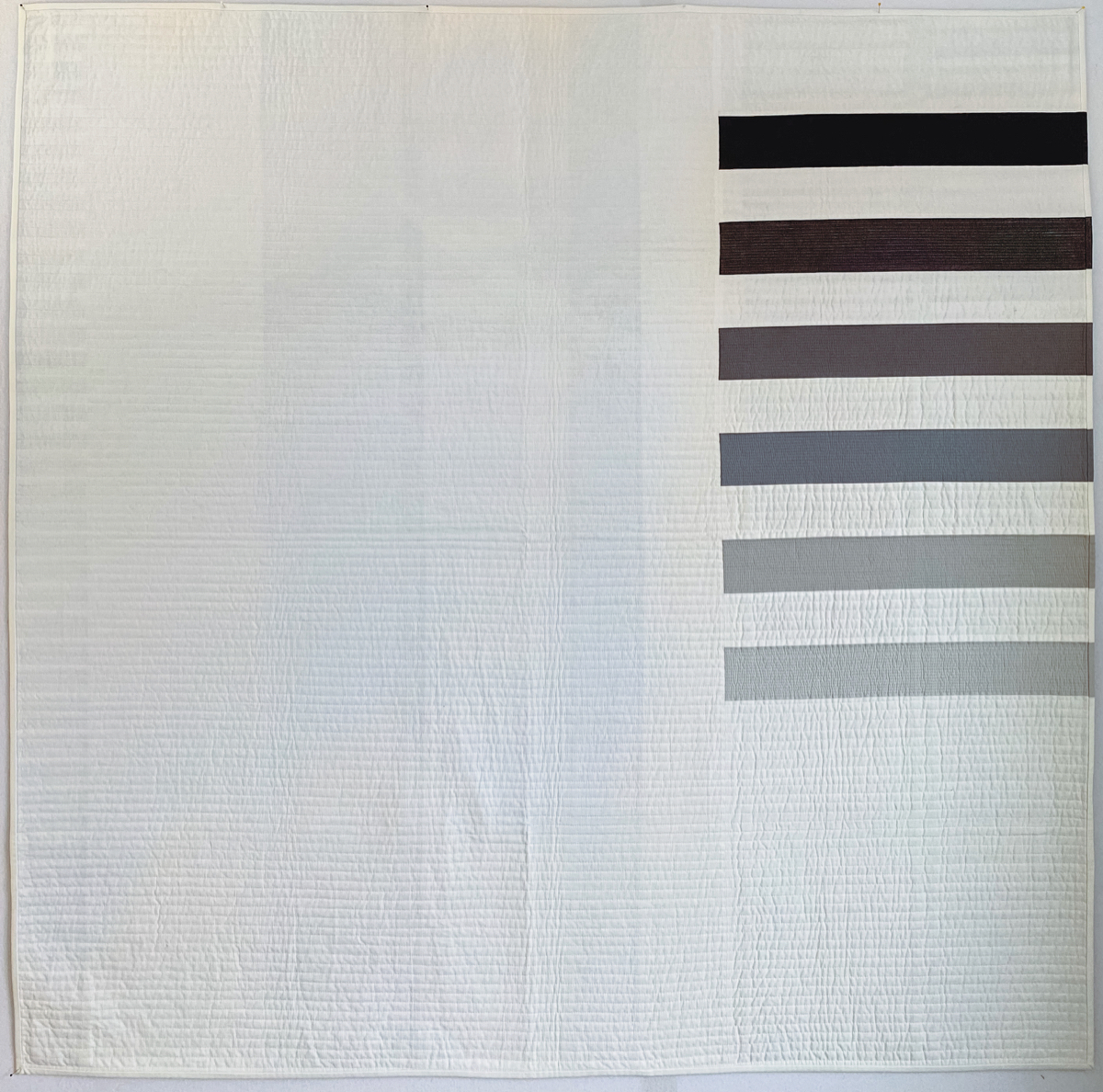
Image List

I maintain an image list of all my quilts to make this process easier. For me, I created a document with the name of quilt, name of file (possibly location on my drive), size of quilt, and year it was made in a table format. For example:

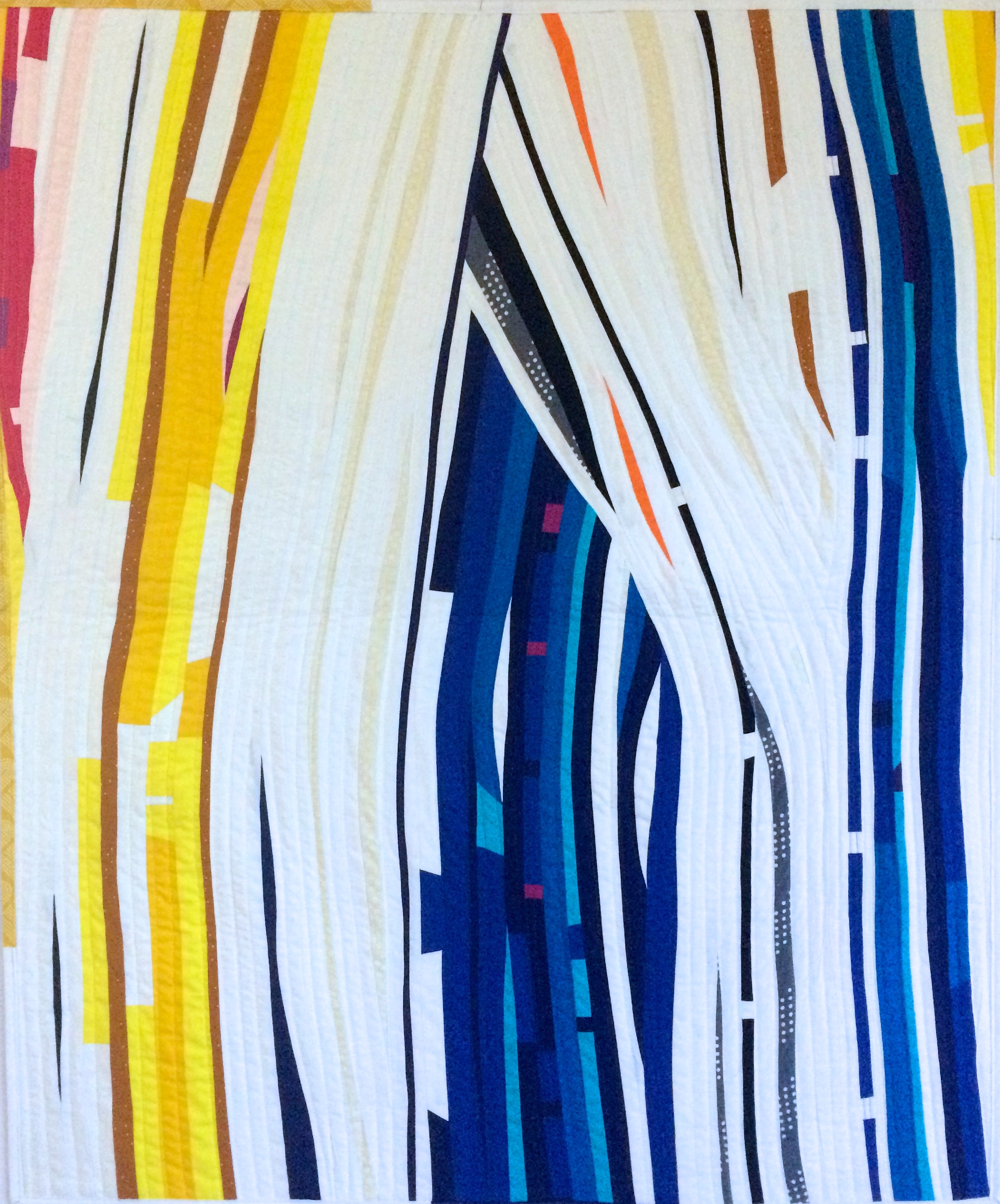
Altitudinal EcosystemIMG01_AltitudinalEcosystem_Wilkie60 x 60″ 2015
TreadIMG02_Tread_Wilkie60 x 60″ 2019
Image list

Town of Cary requests the name, medium used (for me that is textiles) and size.

Artist Statement

Eyes Wide Open
Have you ever thought what people miss seeing and experiencing on a daily basis? We all, too often, get stuck in a routine and distracted by our electronic, and social media-based world. What details are we missing by not taking the time to really see and experience those things around us? The artist believes that with practice and intention, we can be inspired by patterns and design elements in objects we see or events we experience, every day.

Eyes Wide Open is a visual journey in seeing design in everyday objects. Capturing everyday objects with photography and then translating those objects into textile art, quilts, for everyone to experience what the artist saw every day.

Resume

Here is a sample of what I submitted in my resume. I also included publications and teaching in the full resume but not shown here.

Collections
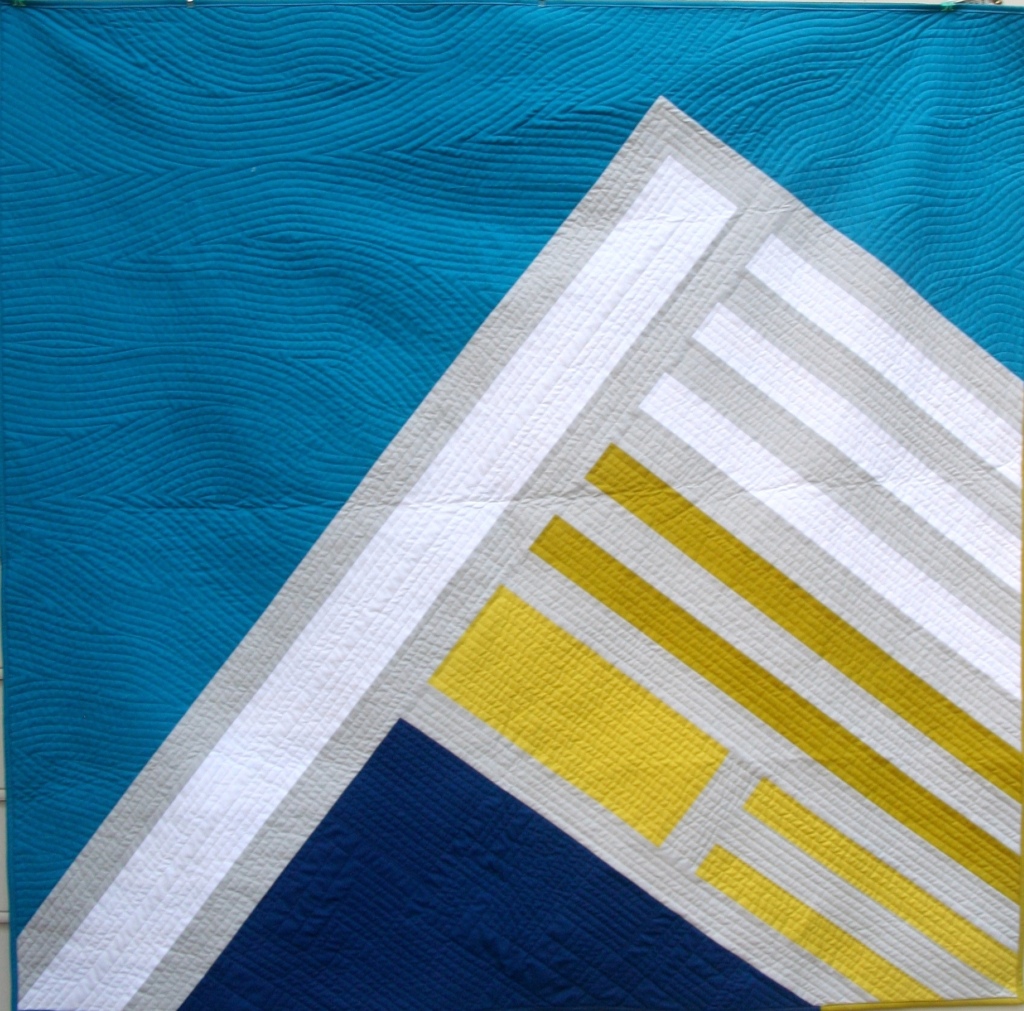
SAS Art Collection: NY Highline, Rails, Pyramids

Shows | Exhibits
2022
Mid-Atlantic Quilt Festival 2022|Quilts: Isolation, One of these things
QuiltCon 2022 |Quilts: Aroha, Inside Looking Out, Study no. 3
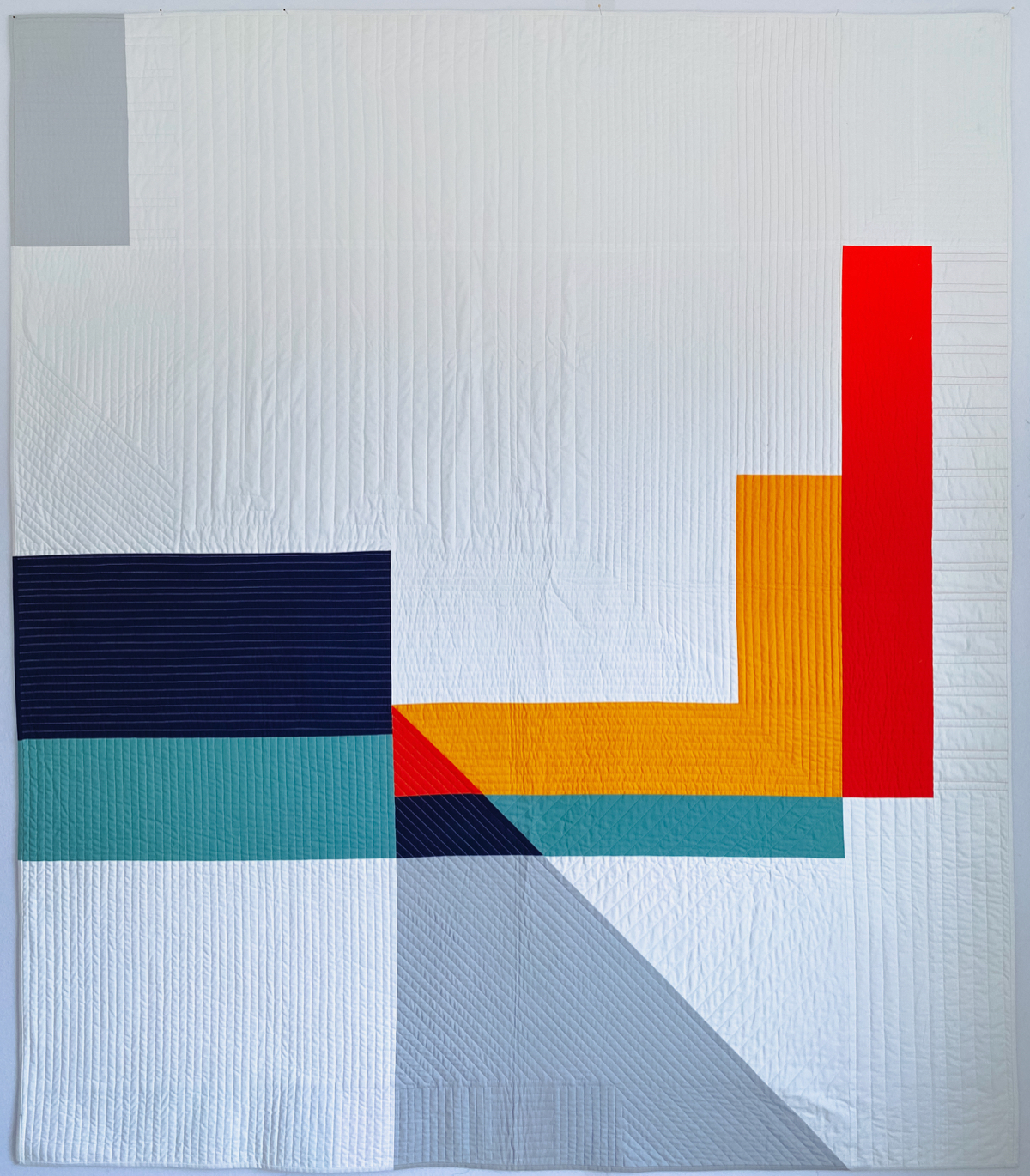
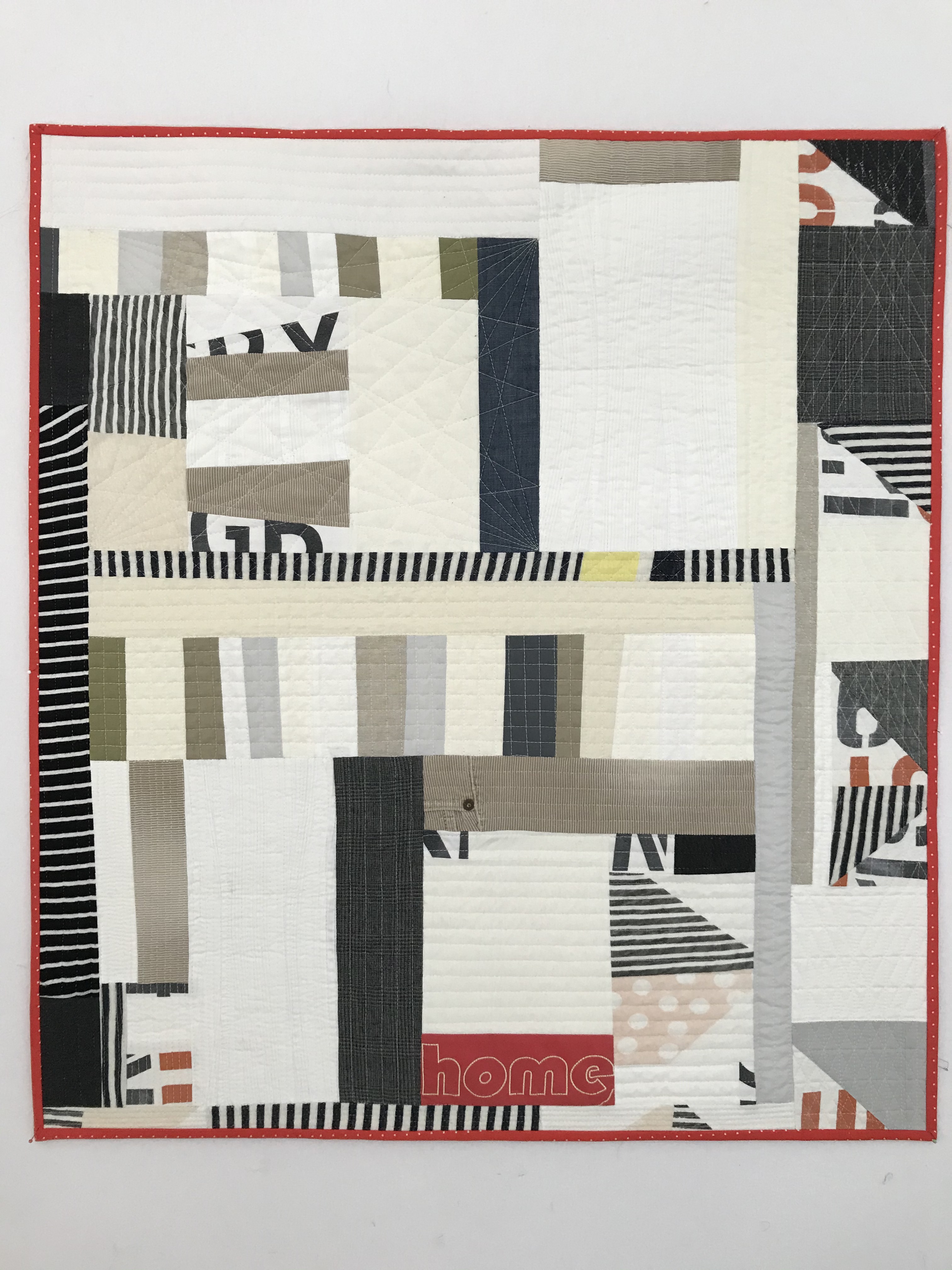
NC State Fair 2022|Quilts: Aroha (1st Prize), Home (1st Prize), Whitney (4th Prize)

2021
Monster Drawing Rally, NC Museum of Art
Modern Quilt Showcase (International Quilt Festival)|Quilt: Study no. 3 Hearth Studio |The Art of Process Exhibition (Quilt: Isolation)
QuiltCon 2021(virtual) |Quilts: Study no. 3, Orange Creamsicle, Isolation

2020 and earlier
QuiltCon 2020 |Quilts: Correlation, Manicured Gardens QuiltCon 2019 | Quilts: Mt. SohCahToa, Fractions & Snowfall AQS Fall Paducah 2018| Quilt: Fractions
QuiltCon 2018 | Quilts: San Francisco Bustle
AQS Grand Rapids 2017| Quilts: Sunday Best & Phased Circles
QuiltCon 2017 | Quilts: Rails, Sunday Best, Negative Crosswalks, NY High Line AQS Grand Rapids 2016 |Quilt: Altitudinal Ecosystem
QuiltCon 2016 | Quilts: Altitudinal Ecosystem, Jungle Ave Tapa
QuiltCon 2015 |Quilts: Phased Circles, Neighbourhood

Success

After applying in February 2022, I was notified that my application was downloaded for review. However, they were holding applications until they could rebook all the shows that were canceled at our various facilities over 2020 and half of 2021.  They informed me that I should hear back from them in the coming months, as they book shows for 2023.

I was a little bummed with the news but understood. It had been a strange couple of years. In July 2022, low and behold, I received news that I was invited to exhibit my work at Page-Walker Arts & History Center. Install date was July 6 2023, Reception date July 21 2023, Show dates were 07/07 to 08/19 and removal date is August 21.

Next Steps

I accepted, of course. I received a contract that was really clear on several things like

  • Terms of Loan
  • My responsibilities vs. Page-Walker for hanging the show
  • Sale information: Prices could not be included in the show itself but could be provided on a price list at the entrance way.
  • Care and return of art works
  • Warranties.

Just to name a few.

I also received install (hanging) instructions for the equipment they used; and the room dimensions so I could plan out the layout.

Close to the end of the year 2022, I had to provide an image of a quilt in the show and an updated show description for the exhibition website.

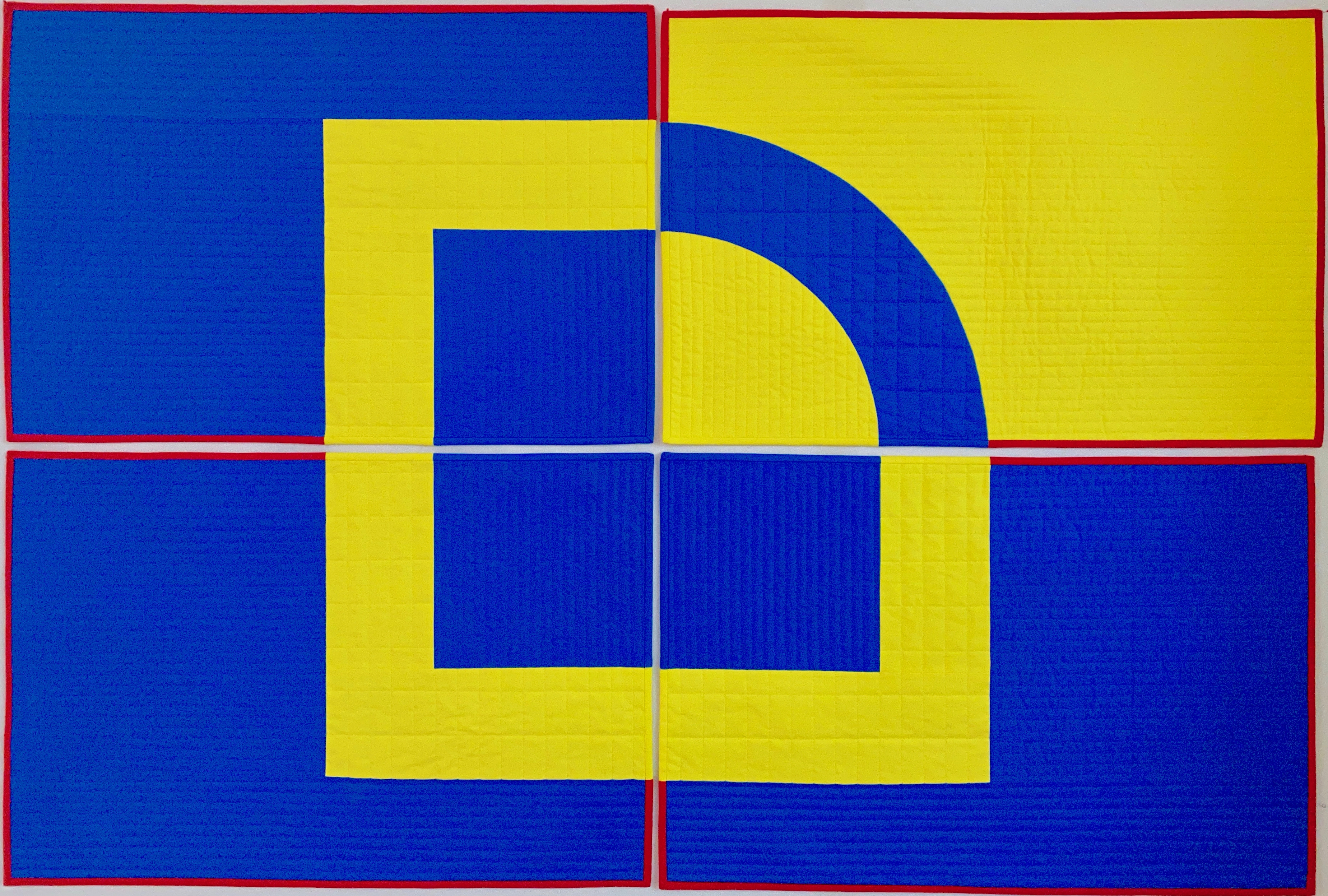
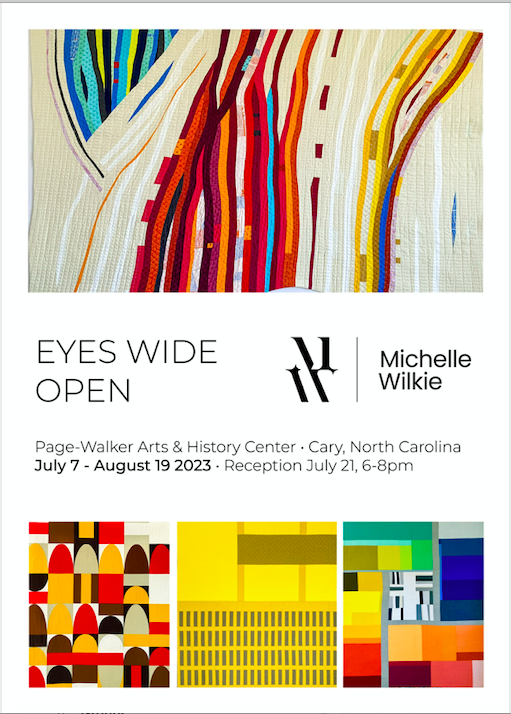
Lastly, closer to the install date I also provide a price list for insurance purposes. I opted for outside my studio a postcard (in the above image at the top) with a QR code and contact information on the back (includes my IG account, Shop url just in case the QR Code doesn’t work, and my email address).

Let me know if you have any questions. Next post, I’ll show you some of show. In the meantime, take a look at my new website which I set up in time for my show. It includes my gallery and shop.
Art Journey – Artist-in-Residence {Part 3}

Getting more involved in the art community has been such a great experience so far and I have learnt so much. In my previous posts, I talked about setting goals to get started (Part 1) and how I applied for exhibitions (Exhibitions – Part 2). This post is about applying for artist-in-residence programs.

The basics

What are they?
An Artist-in-residence program give artists the opportunity to live and work outside of their usual environments, providing them with time to reflect, research, or produce work (Artnet News). Many of the artist in residence, I have found, also provides you with

  • Connection to other artists to help grow your community, and
  • Can give you exposure for your work to seen or more visible.

How long are they?
They vary in length. I have seen many be for a full year to a month long. The one I applied for was only two weeks which was perfect, as at the time I applied, I still was working full-time and also had family responsibilities. There are not many that are only 2 weeks though.

How do you find them?
Similar to exhibitions, there are calls for Artist in Residence. They can be found on organizations web pages/newsletter (eg. Penland School of Craft, MacDowell, Ox-bow), local art studios and some galleries, or from Call for Entry applications like CaFÉ. Also, keep an eye out for art organizations that support artists, as they may repost calls for entry and artist-in-residence programs.

What do they cost? Does an Artist-in-Residence program pay?
This is an interesting question, and again it varies but the organizations are usually clear upfront. You may have to pay for an application fee. For the actual Artist-in-Residence Program, if you have to pay (usually for things like lodging or studio fees) they will let you know during the application process and usually there are scholarship options to help if you need it. Many artist-in-residence program include accommodation, studio space, supplies and a stipend. The application descriptions will let you know what is included and what isn’t so you can make the most informed decision you can.

How many people will be accepted?
Again this varies. It may be one for that particular residency you are applying for, especially if the organization is a studio or gallery based organization. It may be many people, if the organization has multiple studio settings. For example, Penland School of Craft Winter Residency had approximately 80 people across the 15 different studios (buildings). There were 8 people in the Textile studio when I was there.

What will you need ready for applying?
Read the application process thoroughly before applying so you can be prepared. I have found typically you will need:

  • Resume / CV (no more than 1-2 pages)
  • Artist Statement proposing what you want to accomplish in the time during residency.
  • Images of your work (Typically 4-10 images)
  • Image list or descriptions of the supplied images
  • References (this varies; could be just a list of a couple names and their contact details or they may ask for formal letters)
  • Questionnaire (Varies again but they may asks questions based on getting a sense of suitability)

My Submission to Penland School Winter Residency

Penland School of Craft offers many residencies. The one I applied for was their Winter Residency which was a choice of two or four week stay. Like I mentioned, I chose two weeks due to my current commitments. Here are some of the details in my application:

Application Fee: $30
Costs: $1000 (included studio fee and housing in private room w/ private bathroom – cheaper was available; also scholarships are available but since I was working full-time I could afford the costs)
Food: No meals were provided but Kitchens were available also meals from the onsite cafe.
Project Proposal: For my proposal, I mentioned why I needed a two week residency – time away from family and work to focus on my textile art exploration. I discussed that I wanted to explore designing and making quilts that explored who I am, my emotions and events that impacted or affected me. I wanted to work smaller (~20″) and use up-cycled materials in my work.
Resume/CV: I reworked my resume to reduce it to 1 page (typically I have in my resume exhibitions/shows, publications, and teaching experience for just the last 3 years).
Images and Descriptions: Images I used are below. I focused them around my proposal, so I included Isolation, Aroha, Home and One of these things.

If you have any questions, let me know and I am happy to answer them based on my experience. I will write another post to fill you in on my Residency at Penland which was amazing. I will be applying for other artist-in-residence in future (probably for 2024 unless they are local as its hard to be away from family).


Scrappy Star Blocks {Tutorial}

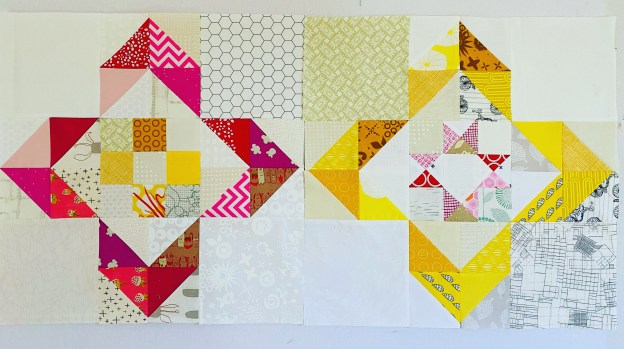
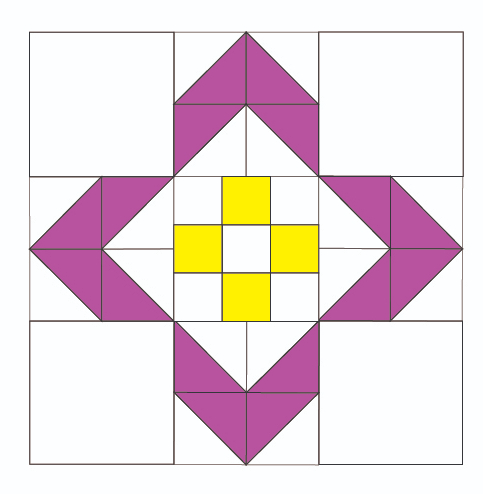
These blocks were inspired when looking at some vintage block combinations. I was thinking about making a gift our of scraps, specifically pink & yellow fabrics with scrappy low volume backgrounds. My goal is to alternate the blocks and make a twin sized quilt (4 x 5 blocks)

Block 1 is made with a simple 9-patch center. Block 2 is made with an Ohio star center. They measure 18″ finished (18 1/2″ unfinished).

Notes:

HST = Half Square Triangle
RST = Right Side together
All seam allowances are 1/4″

Cutting Instructions for each block

Block 1 (9-patch center):

  • Five (5) 2 1/2″ low volume squares
  • Four (4) 6 1/2″ low volume squares
  • Eight (8) 4 1/2″ low volume squares
  • Eight (8) 4 1/2″ pink squares
  • Four (4) 2 1/2″ yellow squares

Block 2 (Ohio Star center):

  • Five (5) 2 1/2″ low volume squares
  • Four (4) 6 1/2″ low volume squares
  • Eight (8) 4 1/2″ low volume squares
  • Two (2) 3 1/2″ low volume squares
  • Eight (8) 4 1/2″ yellow squares
  • Two (2) 3 1/2″ pink squares

Construction of the Center Blocks

Block 1 (9-patch center):

  1. Layout the 9 patch square by using the five (5) 2 1/2″ low volume squares and the four (4) 2 1/2″ squares. The low volume and yellow squares should alternate starting with a low volume square in the corners and center of the block.

  2. Stitch together each of the rows of three blocks. Press seams.
    Note: I press open as it lays flatter and I find it easier to match the seams.

  3. Once all three rows are stitched, sew them together matching seams and pinning in place while stitching. Press seams.

Block 2 (Ohio Star center):

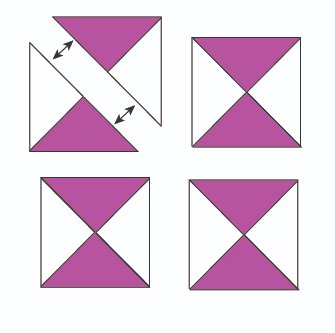
  1. Start by making quarter triangle squares. Take the two (2) low volume and on the back side, draw a diagonal line between one set of corners.
  2. Place the low volume square and the pink 3 1/2″ squares RST.

  3. With the low volume back facing upwards, so you can see the line, stitch a seam on either side of the line.
    Note: I chain piece these, and do all one side first and then the other.

  4. Cut along your drawn line with a ruler and rotary cutter. You should now have two (2) HST from each set of 3 1/2″ squares. Press seams.

  5. Using a ruler and rotary cutter cut these squares in half along the opposite diagonal that is pieced. You should have 8 half pieces.

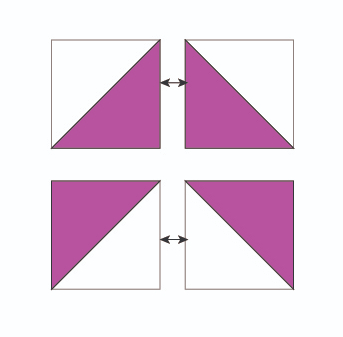
  6. Match up the halves from all the blocks so that the color triangles are diagonally lined up. Put triangles RST, match the seams in the middle (along the longest length) and pin. Stitch together to make 4 blocks. Press seams.

  7. Lastly, trim the blocks to 2 1/2″.
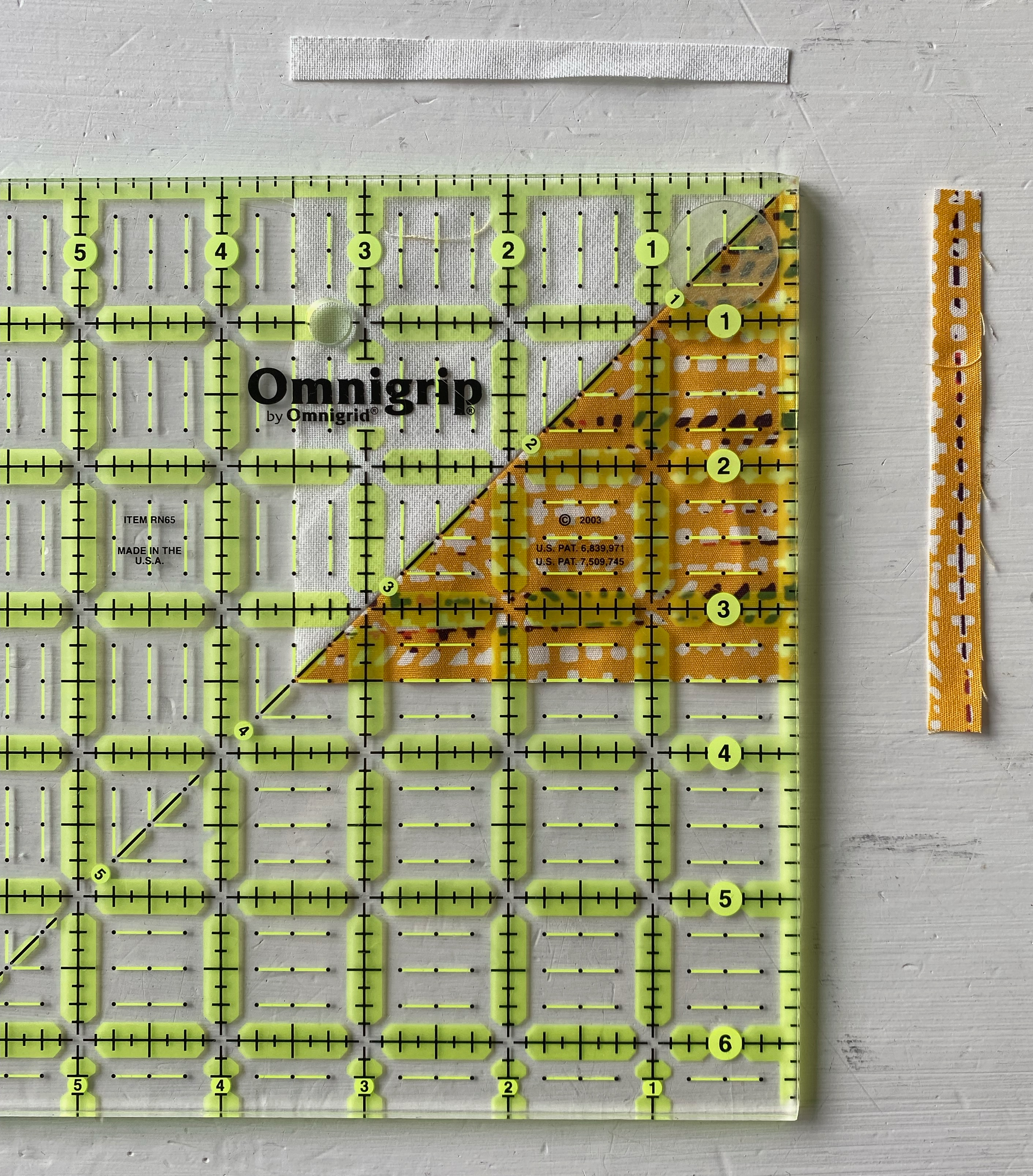
    Note: I use a square ruler with a 45 degree angle line (see image below in next section #5). I line up the 45 degree line with one of my seams and trim all 4 sides (2 at a time), making sure I don’t cut it smaller than 2 1/2″ (you should have at least 1/8 inch to trim for each side).
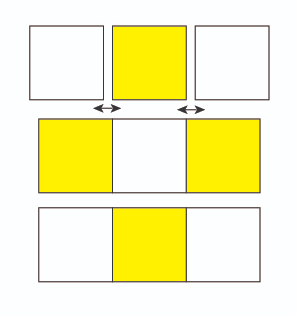
  8. Follow the steps above for Block 1 to now make a 9-patch (instead of yellow use the pink quarter square triangles). The layout, I use, is as follows.

Construction for HSTs

  1. Take the eight (8) 4 1/2″ low volume squares and on the back side, draw a diagonal line between one set of corners.
  2. Place the low volume square and the pink or yellow 4 1/2″ squares right side together.

  3. With the low volume back facing upwards, so you can see the line, stitch 1/4″ seam on either side of the line.
    Note: I chain piece these, and do all one side first and then the other.

  4. Cut along your drawn line with a ruler and rotary cutter. You should now have two HST from each set of 4 1/2″ squares. Press seams.

  5. Trim all HST to 3 1/2″.
    Note: I use a square ruler with a 45 degree angle line. I line up the 45 degree line (as shown below) with the seam and trim all 4 sides (2 at a time), making sure I don’t cut it smaller than 3 1/2″ (you should have at ~1/4 inch to trim for each side).

  6. You will now be making flying geese with the HST’s. Four will be with low volume in the middle and the colored print on the outside, and four with the color print in the middle and low volume on the outside.

  7. Once you have laid out your squares, put them right side together and stitch them together using a 1/4″ seam. Make sure you know which side to stitch. Press seams open.
  8. Final step, is to make four (4) 6 1/2″ squares using one of each of the flying geese (white and colored middle triangles). Place the flying geese RST, along the long side, match the middle seam, so that your colored squares are forming an arrow. Stitch together.

Construction for Final Blocks

  1. For the final construction you are essentially making another 9-patch square. Place the four (4) 6 1/2″ low volume prints at each corner, in the middle place the center block (smaller 9-patch or Ohio Star) and then in the space place the arrow block (the pink or yellow HST block).
  2. Stitch together each of the rows of three blocks. Press seams.
  3. Once all three rows are stitched, sew them together (with RST) matching the two seams and pinning in place while stitching. Press seams as you go.


Enjoy the tutorial and let me know if I need to clarify anything. I would love to see your blocks if you make any. Tag me on Instagram @ml_wilkie and use #scrappystarblocks when you post or share.